What happened
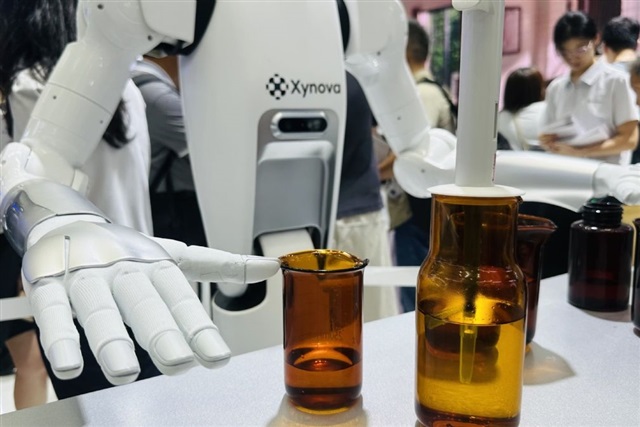
The recently concluded World Robot Conference 2026, held in Beijing, signaled a turning point for China's booming humanoid robot industry. While the event has historically been a battleground for walking and motion capabilities, this year's spotlight moved to robots' end-effectors.
According to the conference's showcase, the competition is now centered on dexterous-hand technology, with three distinct technical approaches vying for dominance. This marks a clear departure from previous years when the primary competition focused on locomotion.
Why it matters
The shift from legs to hands indicates that the humanoid robotics field is maturing. Once basic mobility is largely solved, dexterous manipulation becomes the critical next hurdle for real-world usefulness.
The emergence of three competing technology paths suggests that the industry has not yet settled on a standard approach for robotic hands. The outcome of this race will likely determine which design philosophy underpins future humanoid robots and their ability to handle complex tasks.
Key facts
The World Robot Conference 2026 concluded in Beijing.
China's humanoid robot industry is flourishing.
Attention at WRC 2026 shifted from walking and motion capabilities to robots' end-effectors, particularly dexterous hands.
Three technology paths are competing in the humanoid robotics space.
What to watch next
The evolution of the three technology paths for dexterous hands, as any breakthrough could quickly become the industry standard.
Future robotics events to see whether the focus on manipulation continues, and whether walking abilities become a secondary concern.