What happened
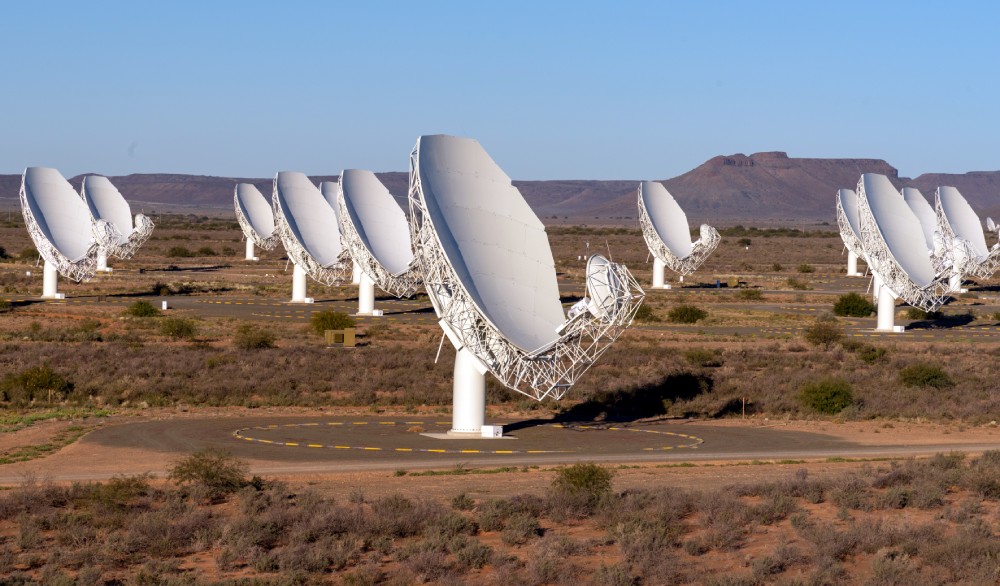
An international astronomy team has used the MeerKAT telescope to capture a faint signal originating 4.7 billion light-years away, according to TechNews 科技新報.
The signal is described as emission from neutral hydrogen in the distant universe, and the detection is framed as a step in studying the universe's long evolutionary history.
The team is described as a cross-national group that includes researchers from the University of Manchester in the UK and the University of the Western Cape in South Africa.
Why it matters
Neutral hydrogen is a basic component of the universe, so tracing it at great distances is a way to probe how cosmic structures evolved over time, as the source frames the work.
Because the signal is extremely faint, the detection suggests that current radio telescope capabilities can reach into a very remote part of cosmic history, though the source does not specify the technical details of the measurement.
Key facts
The detected signal traveled 4.7 billion light-years.
The signal is neutral hydrogen emission from the distant universe.
The MeerKAT telescope made the detection.
The team includes the University of Manchester and the University of the Western Cape.
What to watch next
Whether the team publishes fuller details of the observation, such as how the faint signal was isolated from foreground noise.
How this detection is followed up, since confirming and extending such distant neutral hydrogen measurements is likely to shape the next phase of the research.