AIBID BLOG

AI & Tech

Latest AI products, models, agents, robotics, chips, funding and open source.

Enterprise AI · 5 d ago

GoDaddy's Two-Year Move to Amazon Quick Cuts Dashboards and Saves 15,000 Hours

What happened

GoDaddy replaced its legacy business intelligence tool with Amazon Quick as part of a two-year transformation, according to an AWS Machine Learning post.

The migration affected all parts of the business: the dashboard count dropped by half, rendering times fell below five seconds, and AI-powered self-service analytics became available to every employee.

The effort generated 15,000 hours in annual savings.

Why it matters

The scale of the savings suggests that moving off a legacy BI tool can unlock substantial operational efficiencies, especially when AI-powered self-service analytics are put in the hands of all employees.

Fewer dashboards and faster rendering times may also reduce friction for data-driven decision-making, helping teams get answers more quickly.

Key facts

GoDaddy migrated from a legacy business intelligence tool to Amazon Quick.

The transformation took two years.

GoDaddy saves 15,000 hours annually.

Dashboard count was reduced by 50 percent.

Rendering times are now under 5 seconds.

AI-powered self-service analytics is accessible to every employee.

What to watch next

It may be worth watching whether GoDaddy continues to expand its use of AI-powered analytics or reports further efficiency gains as the self-service tools become embedded in daily workflows.
Sources

Read → Keep scrolling for the next story
Enterprise AI · 5 d ago

Natera builds voice-based phlebotomy scheduling on Amazon Bedrock AgentCore

What happened

Natera has built an automated voice agent on Amazon Bedrock AgentCore that lets patients book mobile phlebotomy appointments through natural conversation, AWS Machine Learning reports.

The implementation relies on a dual-WebSocket bridge, event-driven latency masking, and progressive-trust authentication, according to the published post.

Why it matters

The approach highlights how generative AI agents can handle real-world telephony workflows that demand reliable tool execution and low-latency interaction.

By automating appointment booking, Natera points to a broader pattern of using voice agents for patient-facing operational tasks while preserving a conversational experience.

Key facts

The voice agent runs on Amazon Bedrock AgentCore.

Patients can book mobile phlebotomy appointments via natural conversation.

The system is reported to achieve 100% tool-calling accuracy and sub-7-second latency.

Technical foundations include a dual-WebSocket bridge, event-driven latency masking, and progressive-trust authentication.

What to watch next

How Natera scales this voice-agent architecture across other appointment types or regions.

Whether the latency and accuracy benchmarks hold under varying real-world call loads and conversation patterns.

Sources

Read → Keep scrolling for the next story
Enterprise AI · 5 d ago

SageMaker SDK v3 Brings Script Mode Overhaul with Unified Classes

What happened

Amazon SageMaker Python SDK v3 redesigns script mode, introducing two unified classes, ModelTrainer and ModelBuilder, to streamline how models are trained and built.

The post demonstrates the workflow with two end-to-end examples: a scikit-learn Random Forest model and a multi-GPU fine-tune of Stable Diffusion 3.5 using LoRA.

A new SourceCode mechanism syncs local code into any container at runtime, allowing developers to iterate without rebuilding Docker images.

Why it matters

Unifying the model training and building classes reduces friction for developers who previously had to manage separate APIs and configurations.

Syncing code directly into containers at runtime removes a major bottleneck in experimentation, letting teams test changes faster and with less infrastructure overhead.

The inclusion of large-scale examples like multi-GPU LoRA fine-tuning signals that the SDK v3 is positioned for modern, resource-intensive workloads.

Key facts

SageMaker Python SDK v3 redesigns script mode.

The redesign introduces unified ModelTrainer and ModelBuilder classes.

SourceCode syncs local code into any container at runtime.

The post covers a scikit-learn Random Forest and a multi-GPU Stable Diffusion 3.5 LoRA fine-tune.

What to watch next

Whether these unified classes become the default path for all SageMaker training workflows.

How the runtime code sync feature evolves to support more complex, production-grade deployment scenarios.

Sources

Read → Keep scrolling for the next story
Enterprise AI · 5 d ago

Advanced Data Strategies for Supervised Fine-Tuning

What happened

AWS Machine Learning published the second post in a two-part series on preparing data for supervised fine-tuning.

The post explores advanced approaches: using learning curves to assess data readiness, choosing high-value data subsets, augmenting data with synthetic and distilled examples, and mixing data sources to counter catastrophic forgetting.

Why it matters

Data preparation choices can strongly influence how well a fine-tuned model performs, making these advanced strategies useful for teams refining their training pipelines.

Synthetic data and data mixing offer practical ways to overcome limits in labeled data and reduce the risk that a model loses previously learned capabilities.

Key facts

This is the second part of a two-part series on supervised fine-tuning data preparation.

The post covers evaluating data readiness with learning curves.

It also covers selecting high-value data subsets, augmenting data with synthetic and distilled examples, and mixing data sources to prevent catastrophic forgetting.

What to watch next

Readers may look for guidance on applying learning curves to decide when training data is sufficient.

The use of synthetic, distilled, and mixed data sources could become a more common part of fine-tuning workflows.

Sources

Read → Keep scrolling for the next story
Enterprise AI · 5 d ago

The First Step to Better Fine-Tuning: Getting Your Data In Shape

What happened

AWS Machine Learning published the first installment of a two-part series on supervised fine-tuning, focusing entirely on data preparation. The post argues that the way data is prepared sets the quality ceiling for any SFT project, meaning even a strong model cannot overcome poorly structured training data.

The article outlines the core foundations of SFT data prep: running quality checks, formatting conversations in JSONL, defining schemas for reasoning and tool-calling tasks, and creating a representative split between training and evaluation sets.

Why it matters

In supervised fine-tuning, the model can only learn what the data teaches it. If formatting is inconsistent or quality is low, the final model will inherit those flaws, regardless of the base model's capability.

The explicit focus on reasoning and tool-calling schemas suggests that fine-tuning is no longer just about chat responses, but about enabling models to perform structured, multi-step tasks reliably.

Key facts

The post is the first part of a two-part series on supervised fine-tuning data preparation.

It covers quality checks, conversational JSONL formatting, reasoning and tool-calling schemas, and a representative train/evaluation split.

AWS Machine Learning published the article on August 26, 2026.

What to watch next

The second part of the series is expected to continue the data prep discussion, likely moving beyond foundational formatting into more advanced preparation techniques or downstream evaluation considerations.

Sources

Read → Keep scrolling for the next story
罗永浩@luoyonghao · AIBID #1

【严肃提醒】我从未参与、推广或代言任何虚拟货币项目。所有使用我名字、头像或形象的账号均为假冒,请勿相信任何相关投资信息。

♡ 737 💬 692 ↻ 18
Details →
Enterprise AI · 5 d ago

Google Cloud Launches Fault Injection Testing Preview for Resilience Checks

What happened

Google Cloud announced the preview of Fault Injection Testing, a service designed to help developers and architects automate failure testing in cloud environments.

The service supports two primary failure scenarios in this preview: triggering failover of a high availability Cloud SQL instance and degrading application traffic by adding latency and HTTP error codes through a Layer 7 load balancer.

Fault Injection Testing includes an automated dry run before injection, allows manual start, and offers a stop and revert capability to halt experiments and restore resources.

Why it matters

Modern distributed systems are complex, making high availability increasingly difficult to guarantee, especially when direct access to underlying infrastructure is limited in cloud environments.

Without native resilience testing tools, organizations face risks including damaged customer trust, compliance and regulatory penalties, and delays in large-scale migrations.

Running failure experiments before real outages occur helps verify that safety mechanisms work as intended and that mission-critical services remain online during adverse events.

Key facts

Fault Injection Testing is available in preview through the Google Cloud console, the gcloud CLI, and REST APIs.

The service performs a read-only dry run to check permissions and list affected resources before any fault is injected.

Partners such as KeyBank and Servier are already using Fault Injection Testing to validate their deployments.

Google Cloud recommends using Fault Injection Testing in a non-production environment during the preview.

What to watch next

Organizations can request preview access through their Google Cloud Account Team, enable the Fault Testing API, and assign the roles/faulttesting.operator role to run experiments.

During the preview, early users can provide feedback to shape the product, and Google Cloud may expand the supported fault scenarios beyond Cloud SQL failover and load balancer traffic degradation.

Sources

Read → Keep scrolling for the next story
Enterprise AI · 5 d ago

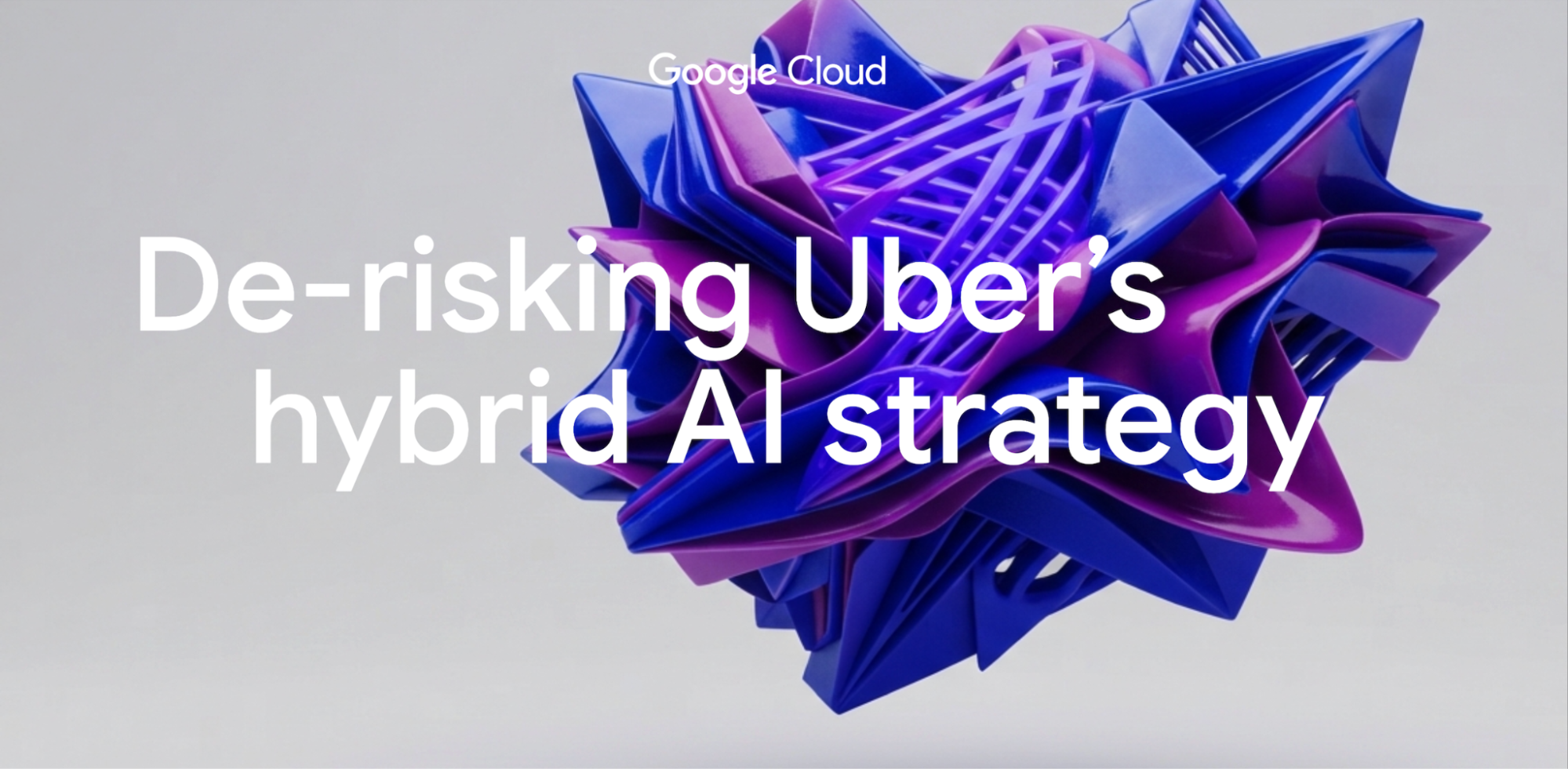
How Uber Uses Application Awareness to Keep Traffic Flowing During Cloud Migration

What happened

Uber, much like the cities it serves, is constantly growing and changing, which means its network traffic must be carefully managed to avoid congestion. The company has evolved its technical strategies over time to keep application traffic flowing smoothly across its platform.

A key part of that effort is application awareness on Cloud Interconnect, an industry-first tool for prioritizing application traffic across hybrid networks. Uber helped design the tool as an early partner, and it uses DSCP marking and configured queuing profiles to classify and prioritize critical end-user traffic over less time-sensitive data.

The tool offers four major features: traffic handling, congestion response, latency management, and cost efficiency. Traffic is sorted into six distinct classes, and business-critical data is protected through strict priority or bandwidth sharing policies. Uber began deploying it during a private preview, starting with Google Cloud Interconnect locations in Phoenix, Arizona, and Ashburn, Virginia.

Why it matters

For global-scale organizations like Uber, migrating distributed and hybrid applications is risky if it interrupts service. Application awareness lets Uber move massive amounts of data, including large analytics workloads and emerging AI use cases, without congesting the network or degrading business-critical application performance.

Legacy overprovisioning approaches treat all traffic equally and can drop high-priority data during bursts, making them costly and unreliable at Uber's scale. Application awareness offers predictable low latency and protects critical traffic, giving Uber the confidence to proceed with a Google Cloud migration while reducing the risk of service interruptions.

Key facts

Uber acted as an early design partner for application awareness on Cloud Interconnect.

The tool classifies traffic into six distinct traffic classes and uses DSCP marking and configured queuing profiles.

Uber deployed the feature starting with Google Cloud Interconnect in Phoenix, Arizona, and Ashburn, Virginia.

Application awareness helped Uber prioritize critical traffic and reduce reliability risks during network congestion events.

What to watch next

Other organizations facing similar hybrid and multicloud migration challenges may adopt application awareness on Cloud Interconnect to protect critical traffic without expensive overprovisioning.

As AI workloads grow and data transfer demands increase, tools that intelligently manage network congestion could become essential for maintaining service reliability.

Sources

Read → Keep scrolling for the next story
Enterprise AI · 5 d ago

Amazon Bedrock AgentCore Gains Cross-Account Knowledge Base Access

What happened

AWS published guidance on using Amazon Bedrock AgentCore to let agents in one AWS account generate answers from an Amazon Bedrock knowledge base in another account.

The knowledge base is backed by Amazon Redshift Serverless, and the design avoids copying source data between accounts.

The post explains the architecture and security boundary, then covers two orchestration models: a code-based Strands agent and a declarative AgentCore harness.

Why it matters

This approach supports organizations that need to keep data in one account while enabling agents in other accounts to use it, which can simplify data governance and reduce duplication.

Presenting two orchestration models gives teams flexibility: one path is code-driven, the other is declaration-based, so builders can choose the style that fits their workflow.

Key facts

Amazon Bedrock AgentCore agents in one account can generate answers from a knowledge base located in another account.

The knowledge base is backed by Amazon Redshift Serverless.

Source data is not copied between accounts.

The post covers architecture, security boundary, and two orchestration models: a code-based Strands agent and a declarative AgentCore harness.

What to watch next

Further detail on how the security boundary is configured could clarify how permissions and data access are enforced across accounts.

It may be useful to see guidance on when to choose the code-based Strands agent versus the declarative AgentCore harness for different use cases.

Sources

Read → Keep scrolling for the next story
Funding · 5 d ago

Ex-Meta scientists bring visual AI to the factory floor

What happened

A group of former Meta scientists has launched Perceptron, an AI offering aimed at industrial environments.

Perceptron says its model can help machines navigate the world while providing in-depth visual intelligence.

The initiative is focused on bringing visual AI capabilities to the factory floor.

Why it matters

Factory floors are complex, dynamic spaces where machines must interpret their surroundings quickly and accurately; a model combining navigation and visual intelligence could be well suited to that challenge.

This effort also highlights how AI expertise from major tech companies is flowing into industrial applications, potentially accelerating automation and smart manufacturing.

Key facts

Perceptron is led by former Meta scientists.

The company offers an AI model designed for visual intelligence.

The model's stated purpose is to help machines navigate the world and could be applied on the factory floor.

What to watch next

Whether Perceptron's model proves reliable in real-world factory settings.

How the company differentiates its visual AI approach from existing industrial automation tools.

Potential adoption by manufacturers seeking to improve machine perception and navigation.

Sources

Read → Keep scrolling for the next story
Funding · 5 d ago

Bill Gates Backs Robot Tax and 'Human Reserved' Jobs to Ease AI Impact

What happened

Bill Gates has floated two policy ideas aimed at limiting the negative effects of artificial intelligence: imposing a tax on robots and creating a category of jobs designated as 'Human Reserved.'

According to TechCrunch, Gates is largely aligned with the Responsible AI movement, but these particular proposals stand out as ideas that were not previously part of the common conversation.

Why it matters

The proposals signal a willingness among prominent tech figures to consider structural interventions as AI reshapes the workforce. A robot tax could affect how companies decide between automation and human labor, while 'Human Reserved' jobs would explicitly shield certain roles from being taken over by machines.

Key facts

Bill Gates wants to see a robot tax as a way to mitigate harms from AI.

Bill Gates supports the creation of 'Human Reserved' jobs.

Gates is mostly in the Responsible AI camp, according to TechCrunch.

The source describes some of Gates' ideas as ones not heard before.

What to watch next

Watch for whether policymakers or other industry leaders adopt or develop these concepts into concrete proposals.

Watch for more details from Gates on how a robot tax or 'Human Reserved' jobs could actually be implemented.

Sources

Read → Keep scrolling for the next story
Ray Wang@anytutorai · AIBID #2

https://t.co/54FDzGhNxO AI中转站,免订阅送点数,无需翻墙,十美金起暢享最強CLAUDE與GPT模型,不封號,也可以直接使用GPT一樣AI對話服務。可开票,无套路,BASE东京的中转站,不参水原价,打的就是十美金小额用顶部模型,

♡ 1 💬 1 ↻ 0
Details →
Technology · 5 d ago

Orchestration emerges as the core CX challenge in the AI agent era

What happened

Enterprises are rolling out AI agents, voice AI, and automation across messaging, voice, and digital channels faster than their underlying architecture can support, according to Tata Communications.

Gaurav Anand, global head of the Customer Interaction Suite at Tata Communications, says most organizations have attached conversational AI to legacy systems never designed for it, leaving human agents to piece together context across disjointed tools.

Anand argues the real problem is not data access but the absence of a shared enterprise context that connects customer identities, interactions, transactions, policies, journeys, and operational systems into a common understanding.

Why it matters

Traditional CX architecture was built for linear, human-driven routing, not for coordinating real-time data flows among autonomous AI systems, data lakes, and human workers. That mismatch creates friction that customers ultimately feel.

The strategic priority is shifting from automation to orchestration: automation solves individual tasks, while orchestration connects them into end-to-end outcomes. In this view, competitive advantage now comes from how intelligently systems hand off work, collaborate, and escalate.

Simply placing a voice AI agent in front of an existing system can recreate the rigid phone menus AI was meant to replace. The broader industry is consolidating, with established contact center providers acquiring AI-native firms to close capability gaps.

Key facts

Gaurav Anand is global head of the Customer Interaction Suite at Tata Communications.

Anand says most enterprises have bolted conversational AI onto legacy systems.

Tata Communications' solution is the Interaction Fabric, an orchestration layer that unifies contact center, messaging, collaboration, AI, and customer data while coordinating AI agents, channels, and enterprise systems in real time.

Anand says the next evolution is context-aware orchestration, where AI agents, applications, and human workers operate from a shared understanding of customers, processes, and business intent.

What to watch next

Whether enterprises move beyond isolated AI deployments to build a common enterprise ontology that aligns customer data, products, policies, SOPs, transactions, and workflows across disconnected platforms.

How the wave of consolidation among contact center providers and AI-native firms reshapes the customer experience market and whether orchestration layers like the Interaction Fabric gain traction.

Sources

Read → Keep scrolling for the next story
Funding · 5 d ago

Z.ai Reveals It Built the Mysterious Ox Alpha Model

What happened

Z.ai has confirmed that it is the AI lab responsible for Ox Alpha, the open model that has been topping benchmarks and leaderboards.

The model had previously been surrounded by mystery, with its origins unclear until this announcement from Z.ai.

The lab said the model's weights are expected to be released soon, making it openly available to the community.

Why it matters

The confirmation gives the AI community clarity on who built a leading open model, which could shift attention toward Z.ai's approach and roadmap.

Releasing the weights soon means researchers and developers will be able to inspect, fine-tune, and deploy a model that has been outperforming rivals on public evaluations.

This move could intensify competition among open-weight labs and raise the bar for transparency in high-performing AI systems.

Key facts

Z.ai is the lab behind the Ox Alpha model.

Ox Alpha is an open AI model topping benchmarks and leaderboards.

The model's weights are set to be released soon.

What to watch next

The actual release of Ox Alpha's weights and how the community receives and uses the model.

Whether Ox Alpha's strong benchmark performance holds up under broader scrutiny once the weights are publicly available.

Sources

Read → Keep scrolling for the next story
Enterprise AI · 5 d ago

Managing the Agentic Era: Google Cloud Outlines Dynamic Capacity Strategies

What happened

Google Cloud announced new FinOps controls for Gemini Enterprise to help organizations track project-level AI spend and avoid token shock.

The company also detailed best practices for dynamic capacity management, covering scheduled capacity, automated fallback plans, and orchestration via Google Kubernetes Engine.

The guidance emphasizes combining reservation of resources for predictable needs with automation to handle unexpected demand surges.

Why it matters

Agentic workloads are resource-intensive and bursty, so static infrastructure can quickly lead to scaling bottlenecks or underutilized compute.

With only 17% of IT leaders confident their current setup can handle agent deployment, dynamic capacity management is becoming essential for enterprise adoption.

Because hardware alone is not enough, teams need scheduling and automation strategies to extract more value from their infrastructure investments.

Key facts

90% of enterprises want to deploy agents within the next three years.

Dynamic Workload Scheduler offers calendar mode for planned events and flex-start mode for batch jobs with flexible start times.

Managed instance groups enable automated, prioritized hardware fallback lists for service continuity.

Google Kubernetes Engine provides an agent-native environment using Custom ComputeClasses and dynamic resource allocation.

What to watch next

Adoption of the new FinOps controls for Gemini Enterprise as organizations seek to manage AI spend and eliminate token shock.

Whether enterprises combine prescheduled capacity with adaptive automation to maintain performance as agent deployments scale.

Sources

Read → Keep scrolling for the next story
Enterprise AI · 5 d ago

Google Cloud adds flexible billing and cost controls for AI agents

What happened

Google Cloud announced expanded billing flexibility and new cost management tools for agent workloads across Gemini Enterprise and developer tools such as Google Antigravity in Gemini Enterprise and Android Studio.

The update introduces a pay-as-you-go option for the Gemini Enterprise app, pooled daily quotas, Flexible Savings Plans, and hard monthly spending caps, while also folding Antigravity and Android Studio AI use into existing Gemini Enterprise subscriptions for select customers.

Why it matters

As AI agents take on more complex work, organizations need financial operations to keep pace with usage patterns that vary between steady business productivity and bursty developer workloads. The new options let teams mix predictable subscriptions with consumption-based pricing.

By consolidating licensing and billing into a single view and adding proactive controls, leaders can grant developers more flexibility without losing visibility or exposing budgets to unexpected spikes.

Key facts

A new pay-as-you-go edition in the Gemini Enterprise app charges only for consumed compute and tokens, with no upfront commitment or base subscription fee.

Flexible Savings Plans let customers commit to a monthly spend and receive 10–20% off token costs, with no minimums or maximums.

Deferred execution pricing, coming soon, can cut inference costs by up to half by running eligible workloads during off-peak capacity windows.

What to watch next

The availability timeline for the pay-as-you-go edition and Antigravity inclusion is rolling out broadly soon, so enterprises should watch for general release details.

Admins will need to decide how to configure pooled quotas and overage policies, since control over whether usage is allowed above daily allowances is a key choice.

Sources

Read → Keep scrolling for the next story
Funding · 5 d ago

Robot AI Leaves Its GPT-2 Era Behind

What happened

Developers building artificial brains for robots are moving out of an early, limited stage of AI capability, according to a new report from TechCrunch.

The report suggests that while robot hardware has advanced, the software powering these machines is still maturing, leaving a gap between physical readiness and intelligent control.

Why it matters

The comparison to GPT-2 highlights how far robot AI still has to go. GPT-2 was an early language model, so the implication is that robot intelligence is only beginning to show real potential.

If robot bodies are outpacing their brains, the next wave of progress will depend more on algorithms and training methods than on mechanical improvements.

Closing this gap could unlock robots that can handle complex, real-world tasks, rather than just performing narrowly programmed functions.

Key facts

Robot brain builders are pushing out of their GPT-2 era.

Robot bodies are waiting for their AI brains to catch up.

The report was published by TechCrunch on August 26, 2026.

What to watch next

Expect more focus on AI models designed specifically for robotics, rather than adapting general-purpose AI.

Watch for breakthroughs in how robot brains learn from physical interaction, which could shrink the gap between hardware and intelligence.

Sources

Read → Keep scrolling for the next story
Lisa_Liao在加州@lisa_liao08 · AIBID #7

很有意思。昨天去了三场活动。 一场是王祖贤的分享,讲角色转变、养生和创业。 一场是每个人都可以vibe coding五分钟,把手搓的项目拿出来,不管成不成熟,先听听大家的想法。 一场是医疗协会的活动,我作为讲师,给在美国行医多年的人,讲茶道里的哲学和科学。 三场都是近百人。最小的8岁,最大的93岁。 这里最吸引我的地方大概是: 不管多大,都在学习; 不管多新的项目,都可以拿来讲; 不管多大的光环,在这里,都可以从零开始。 感谢朋友们的邀请,看见真实的硅谷。@hongshuli365 @yanliudreamer

♡ 8 💬 5 ↻ 0
Details →
Funding · 5 d ago

QueryStory exits stealth with seed funding to build trust in AI outputs

What happened

QueryStory has publicly launched after operating in stealth mode.

The startup secured $6 million in seed funding to support its work.

Its plan is to combine large language models with cybersecurity expertise to improve the coherence of AI queries.

Why it matters

The company's stated goal is to make people believe what AI is telling them, pointing to a broader challenge of trust in AI-generated information.

By applying cybersecurity know-how, QueryStory may be targeting the reliability and integrity of AI interactions, not just their fluidity.

Key facts

QueryStory came out of stealth.

The company raised $6 million in seed funding.

It plans to use LLMs and cybersecurity knowledge to make AI queries coherent.

What to watch next

Whether QueryStory can translate its seed funding into a product that meaningfully improves AI coherence.

How the cybersecurity angle will differentiate its approach in the crowded AI startup space.

Sources

Read → Keep scrolling for the next story
Funding · 5 d ago

Arga Labs raises $10M to refine enterprise AI agent training

What happened

Arga Labs has announced $10 million in seed funding, with General Catalyst leading the round.

The round also drew participation from Box Group, Emergence, Gradient, and SV Angel.

The company is focused on developing a better approach to training AI agents for enterprise use.

Why it matters

As companies deploy more AI agents, the ability to train them effectively becomes a critical bottleneck. Arga Labs is positioning itself to address that challenge directly.

The involvement of prominent investors indicates growing confidence in specialized tools for enterprise AI infrastructure, rather than generic models alone.

Key facts

Arga Labs raised $10 million in a seed funding round.

General Catalyst led the seed round.

Box Group, Emergence, Gradient, and SV Angel participated in the round.

Arga Labs is building a training method for enterprise AI agents.

What to watch next

Whether Arga Labs can differentiate its training approach in a rapidly crowding AI infrastructure market.

How the company applies this seed capital to develop and commercialize its platform for enterprise customers.

Sources

Read → Keep scrolling for the next story
Developer Tools · 5 d ago

GitHub Apps Can Now Access Enterprise Billing Data

What happened

GitHub has rolled out a change that lets enterprise owners grant GitHub Apps access to enterprise billing data.

When creating or configuring a GitHub App, owners can now select the enterprise billing permission and choose the relevant settings.

This gives approved apps the ability to work with billing information inside the enterprise, as permitted by the owner.

Why it matters

The new permission expands what GitHub Apps can do within an enterprise, opening the door to custom integrations that rely on billing data.

It gives enterprises a formal, controlled way to let apps pull billing information instead of relying on manual exports or separate tools.

Because the access requires an explicit owner grant, it preserves oversight over sensitive financial data.

Key facts

GitHub Apps can now access enterprise billing data.

Enterprise owners can grant this access when creating or configuring a GitHub App.

The enterprise billing permission is a new selectable option for GitHub Apps.

What to watch next

Developers may begin building apps that use enterprise billing data for reporting, budgeting, or resource tracking.

Enterprises will need to decide which apps receive this new permission and how to manage the associated security risks.

GitHub may extend similar permissions to other enterprise-level data in future updates.

Sources

Read → Keep scrolling for the next story
Funding · 5 d ago

Legato Steps Out of Stealth with $12M and a New AI-Powered Hearing Glasses Concept

What happened

Legato, a hearing technology startup, has emerged from stealth with $12 million in funding, according to TechCrunch.

The company also offered a first look at its AI hearing glasses, called Legato Frames, which integrate its patented hearing-assistance technology into the arms of eyewear frames.

Why it matters

The move points to a growing trend of embedding assistive audio technology into everyday accessories, potentially making hearing support more discreet and accessible.

Putting the technology in the arms of glasses rather than behind the ear could signal an effort to blend medical function with a familiar, fashion-forward form factor.

Key facts

Legato has raised $12 million.

The company emerged from stealth.

Its product, Legato Frames, are AI hearing glasses that include patented hearing-assistance technology in the arms of the eyewear frames.

What to watch next

The announcement gives few specifics about how the AI component works, so expect more detail on the functionality and user experience of Legato Frames.

It remains to be seen when Legato Frames will be available and how they will be priced or distributed relative to traditional hearing aids.

Sources

Read → Keep scrolling for the next story
Technology · 5 d ago

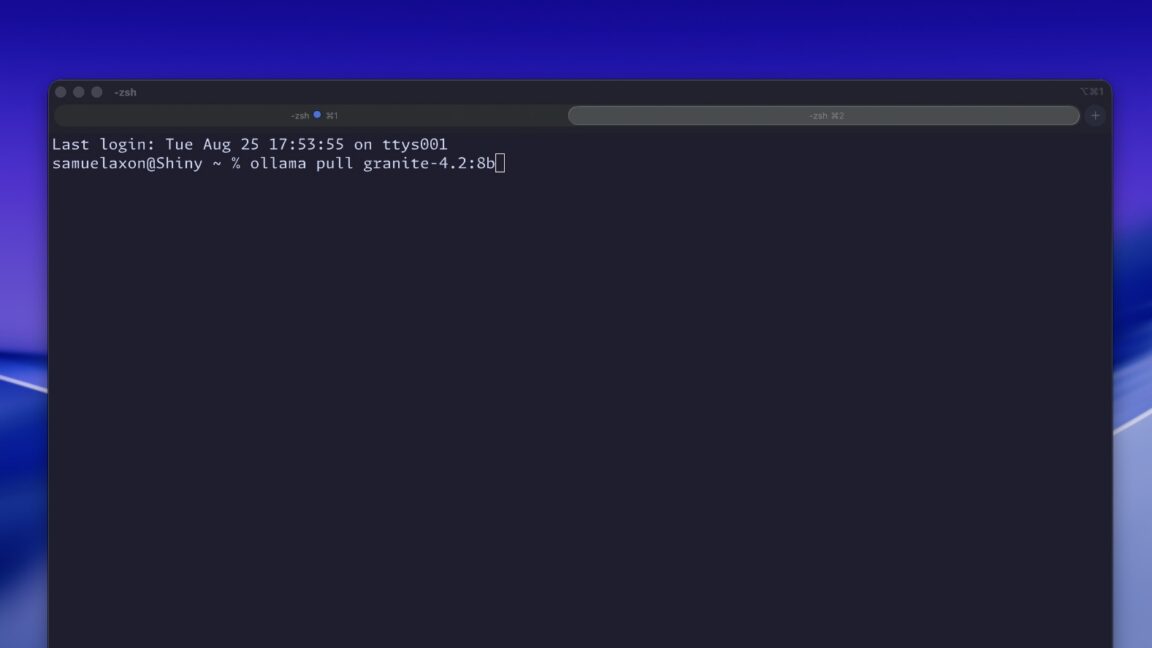
IBM Granite 4.2 targets local LLM trend with enterprise focus

What happened

IBM has unveiled its new Granite 4.2 family of language models, positioned to capitalize on growing interest in running LLMs locally.

The company is emphasizing agentic capabilities and predictable deployment for enterprise environments.

Why it matters

Local LLMs are increasingly appealing to organizations that want more control, privacy, or lower latency than cloud-based models. IBM's move signals a bet on that shift.

By focusing on agentic behavior and predictable deployment, IBM appears to be targeting businesses that need reliability and governance rather than just raw model performance.

Key facts

The new models are called Granite 4.2.

The models are designed to support local LLM use cases.

IBM's focus is on agentic capability and predictable enterprise deployment.

What to watch next

How well Granite 4.2 models perform in agentic workflows compared to other local and cloud-based LLMs.

Whether IBM's enterprise-focused approach helps it stand out as local LLM adoption grows.

Sources

Read → Keep scrolling for the next story
@levelsio@levelsio · AIBID #3

Okay I built it! 🍰 Infinite Slop https://t.co/2SykqwedhF An infinite and interactive AI generated live stream of slop that goes on forever and ever Anything that you write in the chat is generated next and AI will try to connect it to the previous video so there's an actual https://t.co/We7YYMXcGC

♡ 6.7K 💬 811 ↻ 535
Details →
GoDaddy's Two-Year Move to Amazon Quick Cuts Dashboards and Saves 15,000 Hours
Enterprise AI · 5 d ago

GoDaddy's Two-Year Move to Amazon Quick Cuts Dashboards and Saves 15,000 Hours

GoDaddy's migration to Amazon Quick delivered major efficiency gains across analytics, saving 15,000 hours annually.

Read →
Natera builds voice-based phlebotomy scheduling on Amazon Bedrock AgentCore
Enterprise AI · 5 d ago

Natera builds voice-based phlebotomy scheduling on Amazon Bedrock AgentCore

Natera uses Amazon Bedrock AgentCore for voice-based mobile phlebotomy appointment scheduling.

Read →
SageMaker SDK v3 Brings Script Mode Overhaul with Unified Classes
Enterprise AI · 5 d ago

SageMaker SDK v3 Brings Script Mode Overhaul with Unified Classes

SDK v3 unified model classes and runtime code sync enable faster iteration.

Read →
Advanced Data Strategies for Supervised Fine-Tuning
Enterprise AI · 5 d ago · 4

Advanced Data Strategies for Supervised Fine-Tuning

AWS series post covers advanced data prep strategies for supervised fine-tuning.

Read →
The First Step to Better Fine-Tuning: Getting Your Data In Shape
Enterprise AI · 5 d ago

The First Step to Better Fine-Tuning: Getting Your Data In Shape

AWS launches a two-part series on supervised fine-tuning, starting with data quality and formatting essentials.

Read →
Google Cloud Launches Fault Injection Testing Preview for Resilience Checks
Enterprise AI · 5 d ago

Google Cloud Launches Fault Injection Testing Preview for Resilience Checks

Google Cloud announces Fault Injection Testing preview to automate failure testing for cloud services.

Read →
How Uber Uses Application Awareness to Keep Traffic Flowing During Cloud Migration
Enterprise AI · 5 d ago

How Uber Uses Application Awareness to Keep Traffic Flowing During Cloud Migration

Uber used Google Cloud's application awareness on Cloud Interconnect to prioritize critical traffic and unblock its cloud migration.

Read →
Amazon Bedrock AgentCore Gains Cross-Account Knowledge Base Access
Enterprise AI · 5 d ago

Amazon Bedrock AgentCore Gains Cross-Account Knowledge Base Access

Guide details linking Bedrock AgentCore to Redshift-backed knowledge bases across accounts without data copying.

Read →
Ex-Meta scientists bring visual AI to the factory floor
Funding · 5 d ago

Ex-Meta scientists bring visual AI to the factory floor

Perceptron's AI model helps machines navigate and understand the visual world.

Read →
Bill Gates Backs Robot Tax and 'Human Reserved' Jobs to Ease AI Impact
Funding · 5 d ago

Bill Gates Backs Robot Tax and 'Human Reserved' Jobs to Ease AI Impact

Gates, mostly in the Responsible AI camp, floats novel ideas like robot taxes and reserved human jobs.

Read →
Orchestration emerges as the core CX challenge in the AI agent era
Technology · 5 d ago

Orchestration emerges as the core CX challenge in the AI agent era

Enterprises are bolting AI onto legacy CX systems; the new priority is orchestration and shared context.

Read →
Z.ai Reveals It Built the Mysterious Ox Alpha Model
Funding · 5 d ago

Z.ai Reveals It Built the Mysterious Ox Alpha Model

Z.ai confirms it created Ox Alpha; open model's weights release soon.

Read →
Managing the Agentic Era: Google Cloud Outlines Dynamic Capacity Strategies
Enterprise AI · 5 d ago

Managing the Agentic Era: Google Cloud Outlines Dynamic Capacity Strategies

Google Cloud shares dynamic capacity best practices for running AI agents at scale without wasted compute.

Read →
Google Cloud adds flexible billing and cost controls for AI agents
Enterprise AI · 5 d ago

Google Cloud adds flexible billing and cost controls for AI agents

Google Cloud introduces agent-focused pricing options, savings plans, and consolidated spend guardrails.

Read →
Robot AI Leaves Its GPT-2 Era Behind
Funding · 5 d ago

Robot AI Leaves Its GPT-2 Era Behind

Robot bodies are ready, but their AI brains are still catching up.

Read →
QueryStory exits stealth with seed funding to build trust in AI outputs
Funding · 5 d ago · 1

QueryStory exits stealth with seed funding to build trust in AI outputs

QueryStory raised $6M seed to make AI queries coherent using LLMs and cybersecurity expertise.

Read →
Arga Labs raises $10M to refine enterprise AI agent training
Funding · 5 d ago

Arga Labs raises $10M to refine enterprise AI agent training

Arga Labs raises $10M seed led by General Catalyst for enterprise AI agent training.

Read →
GitHub Apps Can Now Access Enterprise Billing Data
Developer Tools · 5 d ago · 1

GitHub Apps Can Now Access Enterprise Billing Data

Enterprise owners can grant GitHub Apps access to billing data via a new permission.

Read →
Legato Steps Out of Stealth with $12M and a New AI-Powered Hearing Glasses Concept
Funding · 5 d ago

Legato Steps Out of Stealth with $12M and a New AI-Powered Hearing Glasses Concept

Hearing tech startup Legato unveiled Legato Frames, glasses with hearing-assistance tech built into the arms.

Read →
IBM Granite 4.2 targets local LLM trend with enterprise focus
Technology · 5 d ago · 1

IBM Granite 4.2 targets local LLM trend with enterprise focus

IBM's Granite 4.2 models aim at local LLM demand with agentic and enterprise features.

Read →