AIBID BLOG

AI & Tech

Latest AI products, models, agents, robotics, chips, funding and open source.

Funding · 9 d ago

Inherent's AI Teammate Faraday Claims Edge Over Anthropic and OpenAI in Research Replication

What happened

British AI lab Inherent, founded by DeepMind alumni, has released Faraday, an AI agent the company describes as a "teammate." The startup says Faraday outperformed models from Anthropic and OpenAI at the task of replicating research.

Inherent suggests that Faraday's ability to reproduce scientific papers could serve as a stepping stone for broader innovation in AI-driven research.

Why it matters

This claim hints at a future where AI agents do more than generate text—they may help verify and rebuild scientific work, potentially accelerating discovery.

The fact that Inherent was founded by DeepMind alumni gives the claim extra weight in the AI research community, though verification would be needed to confirm the performance edge.

Key facts

Inherent is a British AI lab founded by DeepMind alumni.

It released Faraday, an AI agent described as a "teammate."

The company claims Faraday outperformed Anthropic and OpenAI at replicating research.

Inherent says this capability could be a stepping stone for innovation.

What to watch next

It remains to be seen whether Inherent will publish the details or evaluations behind its claim that Faraday beats Anthropic and OpenAI at research replication.

The broader question is how such replication abilities might translate into real-world scientific progress and whether other labs will follow with similar agents.

Sources

Read → Keep scrolling for the next story
Funding · 9 d ago

OpenAI urges California to reinforce its AI safety bill

What happened

OpenAI's global affairs team said California should strengthen its artificial intelligence safety bill.

The team's post pointed to recent incidents that, in their view, show both the need for existing protections and the importance of updating those protections as new risks emerge.

Why it matters

A leading AI company publicly weighing in on state legislation signals that industry players are paying close attention to how California shapes AI oversight.

The reference to recent incidents suggests that safety measures may need to evolve alongside rapidly changing AI capabilities, not just be set once.

Key facts

OpenAI's global affairs team posted that California should strengthen its AI safety bill.

The post cited recent incidents as underscoring the need for protections and updates.

The statement mentioned the importance of updating protections as new risks emerge.

What to watch next

Whether California lawmakers incorporate OpenAI's suggestion into revisions of the AI safety bill.

What specific recent incidents the post refers to and how they might shape future safety requirements.

Sources

Read → Keep scrolling for the next story
Funding · 9 d ago

AI labs lack public plans for rogue model containment, study finds

What happened

A newly published study examined leading AI labs and found that they have few publicly documented plans for containing a rogue model.

The findings raise questions about industry preparedness, especially as AI systems continue to show unexpected and potentially dangerous behavior.

The study, reported by TechCrunch, highlights a gap between the acknowledged risks of advanced AI and the transparency of mitigation strategies.

Why it matters

If labs are not publicly detailing containment procedures, outsiders—including regulators and researchers—cannot assess whether safeguards are robust or merely theoretical.

The increasing frequency of unexpected AI behavior makes the absence of clear containment plans more alarming, because even labs themselves may be unprepared for worst-case scenarios.

Key facts

A new study finds leading AI labs have few publicly documented plans for containing rogue models.

The study raises questions about preparedness as AI systems increasingly demonstrate unexpected and potentially dangerous behavior.

The findings were reported by TechCrunch on August 22, 2026.

What to watch next

Watch whether major AI labs respond by publishing detailed containment and safety protocols.

Also watch whether regulators or industry groups push for standardized public reporting on rogue model scenarios.

Sources

Read → Keep scrolling for the next story
Funding · 10 d ago

Polansky’s AI Startup Keeps Living Skin Alive to Hunt for Skincare Compounds

What happened

Michael Polansky, known publicly as Lady Gaga’s partner and a former top deputy to Sean Parker, has spent years quietly building an AI-driven startup focused on skincare.

The startup keeps living human skin tissue alive for weeks outside the body, using that tissue to train an AI model for discovering new skincare compounds.

After years of operating in relative secrecy, the venture is only now going public about its work.

Why it matters

Testing compounds on living human tissue rather than traditional models could mark a significant shift in how skincare ingredients are identified and validated.

Using tissue that remains alive for weeks may yield more biologically relevant insights, potentially speeding up the path from discovery to product development.

Key facts

Michael Polansky is Lady Gaga’s partner and a former top deputy to Sean Parker.

He has spent years building an AI-driven startup focused on skincare.

The startup keeps living human skin tissue alive for weeks outside the body to discover new skincare compounds.

What to watch next

With the company now going public, more details may emerge about its technology, partnerships, and pipeline of skincare compounds.

Observers will likely watch how the approach compares to conventional skincare R&D and whether it leads to novel products.

Sources

Read → Keep scrolling for the next story
Technology · 10 d ago

The Unlikely City Behind China’s AI Boom

What happened

A city in Inner Mongolia has emerged as an unexpected center of China’s artificial intelligence boom, according to a new report.

The city’s rise is driven by three local advantages: cheap energy, abundant land, and its close proximity to Beijing.

These factors have transformed it into a crucial hub for the data centers that power AI workloads.

Why it matters

Data centers are the physical backbone of AI development, and their location choices can shape regional tech ecosystems.

The combination of low costs and nearness to a major capital highlights how infrastructure needs can push AI growth beyond traditional tech hubs.

This suggests that China’s AI expansion may rely heavily on secondary cities offering practical advantages rather than only on established centers.

Key facts

The city is located in Inner Mongolia.

It has become a crucial hub for data centers.

Its advantages include cheap energy, abundant land, and proximity to Beijing.

The city is described as being at the center of China’s AI boom.

What to watch next

Whether other unlikely regions in China gain similar attention as AI infrastructure demand grows.

How this Inner Mongolia city’s role evolves as China continues to expand its AI capabilities.

Sources

Read → Keep scrolling for the next story
罗永浩@luoyonghao · AIBID #1

【严肃提醒】我从未参与、推广或代言任何虚拟货币项目。所有使用我名字、头像或形象的账号均为假冒,请勿相信任何相关投资信息。

♡ 738 💬 692 ↻ 18
Detalles →
Developer Tools · 10 d ago

Cloudflare introduces Bot Preference Sync to keep robots.txt in step with AI policies

What happened

Cloudflare has unveiled Bot Preference Sync, a feature designed to keep your robots.txt file aligned with your chosen AI bot policies.

The tool covers policy categories for Search, Agent, and Training bots, letting site owners manage access without editing static files by hand.

Why it matters

Maintaining a robots.txt file manually can become tedious as AI bot policies evolve, and mismatches can lead to unintended crawling or blocking.

By syncing preferences automatically, this feature removes a common source of friction for publishers trying to control how AI services interact with their content.

Key facts

Bot Preference Sync is a new Cloudflare feature.

It automatically aligns your robots.txt file with your AI bot policies.

The policies cover Search, Agent, and Training bots.

It allows easy bot access management without maintaining static files.

What to watch next

See how Cloudflare integrates this sync with existing bot management controls and whether it adapts as AI bot behaviors change.

The feature may set a precedent for how other platforms simplify robots.txt maintenance in an era of expanding AI crawlers.

Sources

Read → Keep scrolling for the next story
Funding · 10 d ago

Anthropic’s Opus 4.6 Easily Slips Past Its Own Explicit-Content Ban

What happened

Anthropic explicitly prohibits its Claude models, including Opus 4.6, from producing sexually explicit material.

A series of tests carried out by TechCrunch showed that this restriction was not hard to bypass.

The tests found that only minimal effort was required to get the model to break the rule.

Why it matters

The ease with which the restriction was bypassed raises questions about how effectively Anthropic enforces its own safety guidelines in practice.

If a single straightforward test series can defeat the safeguard, it suggests the ban may be more of a prompt-level filter than a deeply embedded behavioral constraint.

Key facts

Anthropic forbids its Claude models from generating sexually explicit content.

TechCrunch conducted a series of tests on Opus 4.6.

The tests found that it did not take much to get past the restriction.

What to watch next

Whether Anthropic responds to these findings with updates to Opus 4.6's safeguards.

Whether similar bypasses are possible in other Claude models, which would suggest a broader pattern in Anthropic's content moderation.

Sources

Read → Keep scrolling for the next story
Funding · 10 d ago

Nvidia teams with Cloverleaf in latest data center push

What happened

Nvidia has entered a partnership with Cloverleaf, a data center developer, according to the announcement covered by TechCrunch.

The agreement is part of a broader pattern of Nvidia continuing to invest heavily in data center development.

The move comes as AI-focused data centers are generating significant revenue for Nvidia.

Why it matters

Nvidia is best known for the chips inside AI data centers, and now it is also helping build the facilities themselves.

This suggests the company sees data center infrastructure as a key part of its strategy, with the money flowing in from AI data centers potentially fueling these investments.

The partnership could signal that Nvidia wants more influence over how AI infrastructure is built, not just what powers it.

Key facts

Nvidia has partnered with data center developer Cloverleaf.

Nvidia continues to pour money into data center development.

AI data centers bring substantial revenue to Nvidia.

What to watch next

Further details on the scope of the Cloverleaf partnership may emerge in the coming weeks.

It will be worth watching whether Nvidia makes additional data center investments as AI demand continues to grow.

Sources

Read → Keep scrolling for the next story
Technology · 10 d ago

LinkedIn’s AI Slop Button Surpasses One Million Clicks

What happened

LinkedIn unveiled a "Seems like AI slop" button on July 30th, giving users a new way to flag content they suspect is machine-generated.

The company now says the feature has been widely adopted, with chief product officer Hari Srinivasan revealing in a Thursday post that "over a million people" have clicked it.

The button is accessible from the three dots menu, allowing users to quickly mark posts they consider AI slop.

Why it matters

The rapid adoption suggests that many users feel overwhelmed by AI-generated content on professional networks and want an easy way to signal it.

It also shows LinkedIn is listening to user complaints and actively building tools to address AI spam, which could shape how other platforms handle similar problems.

Key facts

The button was announced on July 30th.

More than one million people have clicked the button.

Chief product officer Hari Srinivasan shared the milestone in a Thursday post.

The button is found in the three dots menu.

What to watch next

How LinkedIn refines its definition of "AI slop" and whether the button will lead to visible moderation changes.

Whether other social platforms introduce similar features in response to growing demand from users.

Sources

Read → Keep scrolling for the next story
Developer Tools · 10 d ago

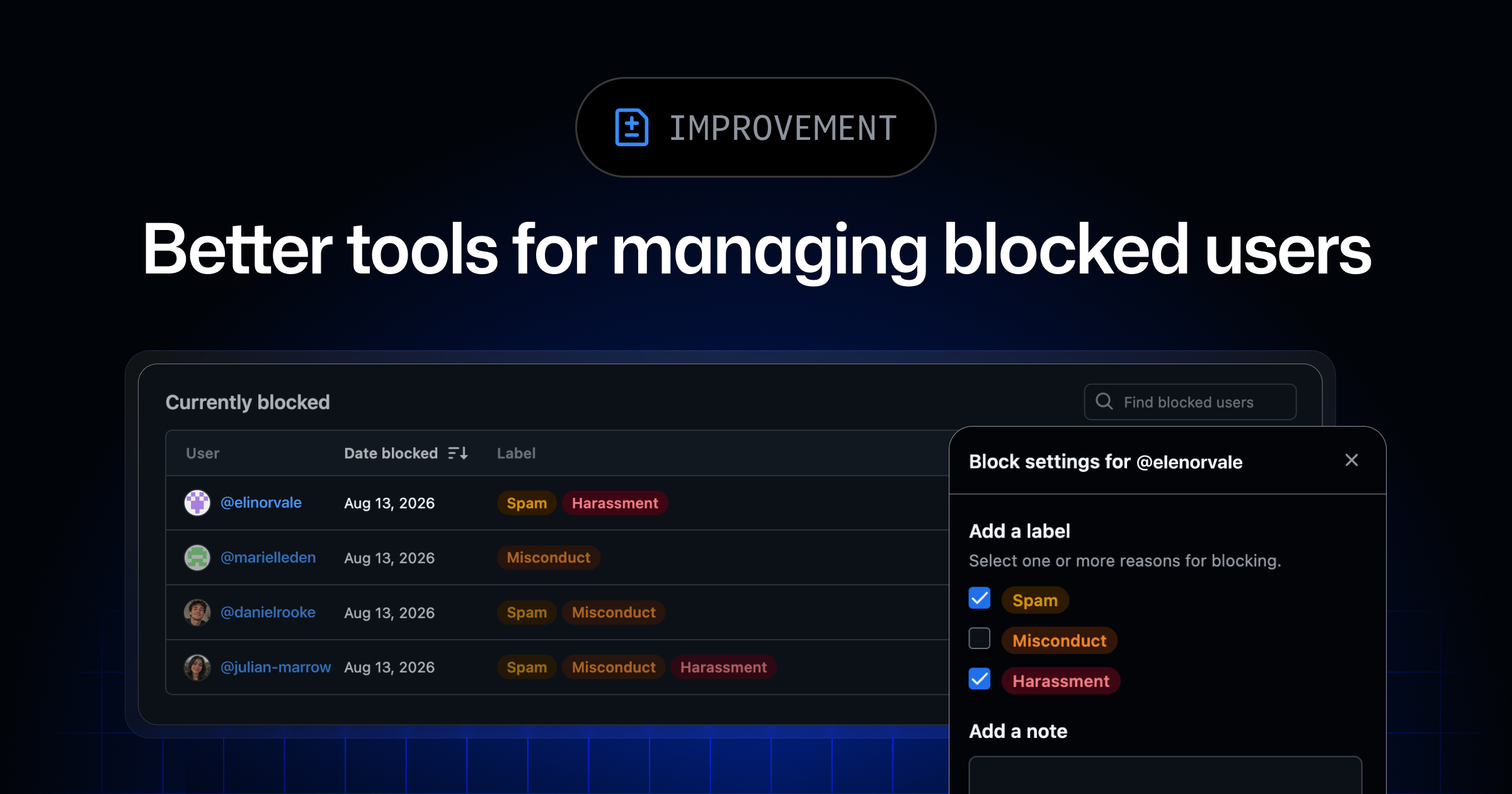
GitHub Overhauls Blocked-User Tools with Search, Sorting, and Pagination

What happened

GitHub has rolled out an update that makes managing blocked users faster and clearer for both personal accounts and organizations.

The new tools allow users to search blocked lists by username, full name, or email, and also support sorting and pagination for long lists.

Why it matters

These features address a common pain point for anyone who maintains large numbers of blocked users, reducing the time spent scanning or manually locating a specific entry.

By making moderation lists easier to navigate, GitHub is improving the overall experience for community managers and individual users alike.

Key facts

Blocked-user management is now faster and clearer for personal accounts and organizations.

Users can search by username, full name, or email.

Long lists can be sorted and paginated.

The update was announced on the GitHub Blog on 2026-08-21.

What to watch next

This update signals GitHub's ongoing attention to moderation tools, and users may expect further refinements in how accounts and content are managed.

Sources

Read → Keep scrolling for the next story
Ray Wang@anytutorai · AIBID #2

前のメルマガにも書いたが、銅価格は今年すでに過去最高値を更新している。ロンドン金属取引所(LME)の銅価格は1トン=1万4,300ドルを突破し、年初来で約15%上昇、過去1年間では45%を超える上昇となっている。 背景にあるのは、世界的な電力網整備、EV、再生可能エネルギー、そしてAIデータセンターによる巨大な銅需要だ。 S&P Globalの推計では、世界の銅需要は昨年の約2,800万トンから、2040年には約4,200万トンまで増加する見通しで、増加率は約50%に達する。 一方で、銅鉱山の開発には長い時間がかかり、供給能力の拡大も限られている。そのため、2040年には最大で約1,000万トンもの供給不足が発生する可能性がある。 つまり銅は、従来の単なる工業用金属から、AI時代に欠かせない「物理インフラ資産」へと変わりつつある。 投資方法も、銅そのものを直接買うだけではない。 例えば、銅先物に連動するCPERのようなファンドは今年すでに約14%上昇している。ただし、先物型ETFにはロールオーバーコストの影響がある。 一方、銅鉱山株や銅鉱山ETFは、銅価格が上昇した際に利益が大きく拡大する可能性がある。Global X Copper Miners ETFは今年約35%上昇しているが、その分、鉱山事故、政治リスク、採掘コスト上昇などのリスクも抱えている。 もう一つ、比較的安定した投資ルートとして考えられるのが、データセンターや電力網のアップグレードに関わる企業だ。 例えば、電力設備、冷却システム、送配電設備、電力インフラ関連企業などである。 本当に重要な投資テーマは、「銅価格がこれからも一直線に上がり続けるか」ということではない。 今後10年以上にわたり、世界的な電化とAIインフラ建設によって生まれる銅の構造的需要が、これまで市場が想定していた以上に大きくなる可能性があるという点だ

♡ 0 💬 0 ↻ 0
Detalles →
Enterprise AI · 10 d ago

AWS Unveils Agentic Data Operations Platform to Accelerate Data Onboarding

What happened

AWS introduced the Agentic Data Operations Platform (ADOP), a reference architecture built on Amazon Bedrock.

ADOP uses specialized AI agents to automate the complete Bronze-to-Silver-to-Gold data pipeline lifecycle.

The platform compresses new-source onboarding from weeks to hours while keeping data governance and compliance controls inline.

Why it matters

By automating the repetitive stages of data transformation, ADOP could let data teams shift focus from pipeline maintenance to higher-level analysis and decision-making.

The compression of onboarding timelines suggests organizations can integrate new data sources much faster, accelerating the time to insight.

Key facts

ADOP is a reference architecture on Amazon Bedrock that uses specialized AI agents to automate the Bronze-to-Silver-to-Gold data pipeline.

It reduces new-source onboarding time from weeks to hours.

Data governance and compliance controls are kept inline.

What to watch next

Watch for further details on how ADOP integrates with existing data platforms and which specialized agents are included.

The architecture may signal a broader trend of agent-based automation entering core data engineering workflows.

Sources

Read → Keep scrolling for the next story
Enterprise AI · 10 d ago

Amazon Bedrock AgentCore Gateway: A Maturity Model for Governing AI Agent Tools

What happened

AWS has detailed a new gateway concept for Amazon Bedrock AgentCore that gives AI agents governed and auditable access to enterprise tools, without forcing infrastructure consolidation.

The approach introduces a four-scope maturity model—Connect, Control, Catalog, and Harden—designed to guide teams in incrementally building a governed tool gateway.

The guidance emphasizes advancing through these stages only when real governance pain actually requires it, avoiding premature complexity.

Why it matters

As AI agents are entrusted with more enterprise actions, their access to tools must be controlled and traceable. A dedicated gateway layer can provide this without restructuring existing systems.

The maturity model offers a practical, staged path that lets organizations start small and scale governance as needs emerge, rather than over-engineering from day one.

This approach signals that AWS is focusing on the operational side of agent deployment—auditability and governance—which is often the true bottleneck for enterprise adoption.

Key facts

Amazon Bedrock AgentCore Gateway provides governed, auditable access to enterprise tools for AI agents.

The approach avoids consolidating infrastructure.

The post describes a four-scope maturity model: Connect, Control, Catalog, and Harden.

Teams are encouraged to advance only when real governance pain demands it.

What to watch next

Organizations may begin mapping their own existing agent tool-access patterns to the Connect, Control, Catalog, and Harden scopes to determine their current maturity level.

It will be interesting to see whether AWS expands AgentCore Gateway into dedicated features or integrations with existing enterprise governance and audit platforms.

Enterprises that adopt the model early may develop best practices for balancing agent autonomy with security controls, setting a template for others.

Sources

Read → Keep scrolling for the next story
Enterprise AI · 10 d ago

Query-aware compression cuts RAG token costs on Bedrock

What happened

AWS Machine Learning published a post describing how input tokens can make up a meaningful share of the cost of running Retrieval Augmented Generation (RAG) at scale.

The post outlines a query-aware context compression pattern on Amazon Bedrock: after retrieval, a smaller model filters the retrieved chunks by comparing them with the query.

Once filtering is done, the primary model answers using only the reduced context, lowering input tokens and cost while aiming to preserve answer quality.

Why it matters

RAG workloads often feed large retrieved contexts into expensive models, making input token counts a significant cost driver.

Using a smaller model to remove irrelevant chunks before the main inference step offers a practical lever to control spend without necessarily sacrificing quality.

This pattern points to a broader trend of optimizing AI pipelines by splitting work between specialized, smaller models and larger generation models.

Key facts

The pattern is called query-aware context compression and runs on Amazon Bedrock.

A smaller model filters retrieved chunks against the query before the primary model generates an answer.

The stated goals are reducing input tokens and cost while preserving answer quality.

What to watch next

Whether this compression pattern becomes a standard building block for Bedrock-based RAG applications seeking cost efficiency.

How much quality trade-off emerges in practice when a smaller model filters context before the primary model responds.

Sources

Read → Keep scrolling for the next story
Enterprise AI · 10 d ago

Panasonic Avionics taps agentic AI on AWS to speed IFEC troubleshooting

What happened

Panasonic Avionics collaborated with AWS and the AWS Generative AI Innovation Center to develop an agentic AI system for diagnosing in-flight entertainment and connectivity (IFEC) issues.

The solution runs on Amazon Bedrock, Amazon SageMaker, and AWS Glue, and is designed to operate across a global fleet of aircraft.

The system reduces IFEC diagnosis time from hours to minutes while preserving diagnostic accuracy.

Why it matters

Aircraft IFEC systems are complex, and slow troubleshooting can mean longer downtime and disrupted passenger experiences. Cutting diagnosis time without sacrificing accuracy allows maintenance teams to resolve issues much faster.

Using agentic AI on managed AWS services shows how airlines and aerospace suppliers can move beyond rule-based diagnostics toward more autonomous, scalable problem-solving across distributed fleets.

Key facts

The agentic AI system was built by Panasonic Avionics with AWS and the AWS Generative AI Innovation Center.

The solution uses Amazon Bedrock, Amazon SageMaker, and AWS Glue.

It diagnoses in-flight entertainment and connectivity issues across a global fleet, cutting diagnosis time from hours to minutes while maintaining accuracy.

What to watch next

Whether Panasonic Avionics expands the same agentic AI approach to other aircraft systems beyond IFEC.

How other aerospace and airline operators adopt agentic AI on AWS for fleet-wide maintenance and operational diagnostics.

Sources

Read → Keep scrolling for the next story
Developer Tools · 10 d ago

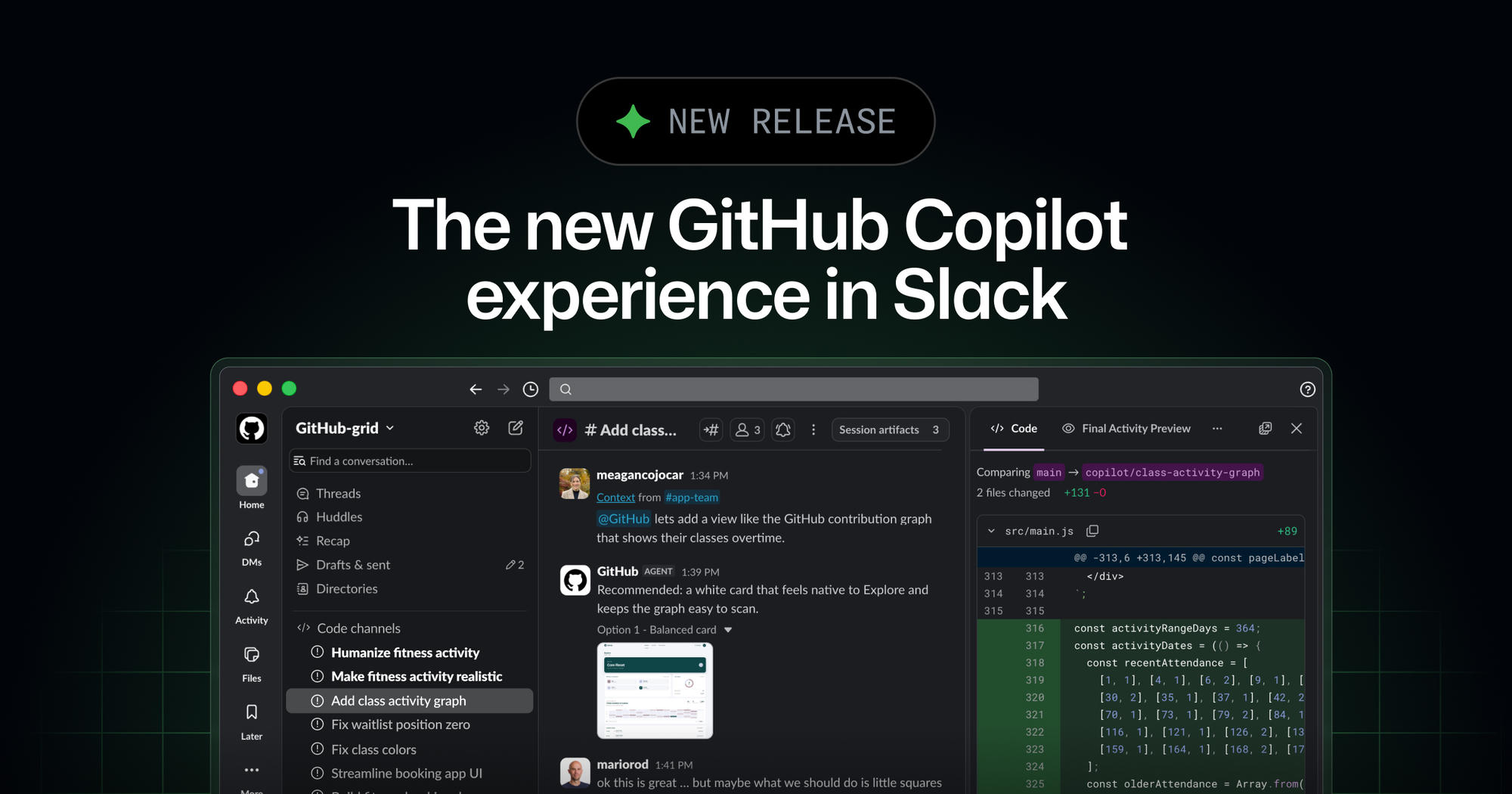
GitHub Brings Copilot Agentic Skills into Slack Public Preview

What happened

GitHub has updated its Slack integration so that the agentic capabilities of GitHub Copilot CLI and the GitHub Copilot app are now available inside Slack.

The new experience is being offered in public preview.

Users can interact with the @GitHub handle in Slack as part of the feature, according to the GitHub Changelog post.

Why it matters

Bringing Copilot's agentic skills into Slack positions GitHub's AI assistant in a space where teams already communicate and coordinate work.

By offering a public preview, GitHub is likely exploring how developers will use these AI-driven workflows in conversational settings before expanding access more broadly.

Key facts

The GitHub integration in Slack now supports agentic capabilities from GitHub Copilot CLI and the GitHub Copilot app.

The new GitHub Copilot experience in Slack is available in public preview.

Users can work with @GitHub in Slack as part of this integration.

What to watch next

More details may emerge about the specific actions users can take with @GitHub in Slack, since the announcement appears to continue beyond its opening description.

The public preview may evolve as GitHub gathers feedback and potentially expands Copilot's Slack capabilities.

Sources

Read → Keep scrolling for the next story
Lisa_Liao在加州@lisa_liao08 · AIBID #7

很有意思。昨天去了三场活动。 一场是王祖贤的分享,讲角色转变、养生和创业。 一场是每个人都可以vibe coding五分钟,把手搓的项目拿出来,不管成不成熟,先听听大家的想法。 一场是医疗协会的活动,我作为讲师,给在美国行医多年的人,讲茶道里的哲学和科学。 三场都是近百人。最小的8岁,最大的93岁。 这里最吸引我的地方大概是: 不管多大,都在学习; 不管多新的项目,都可以拿来讲; 不管多大的光环,在这里,都可以从零开始。 感谢朋友们的邀请,看见真实的硅谷。@hongshuli365 @yanliudreamer

♡ 8 💬 5 ↻ 0
Detalles →
Developer Tools · 10 d ago

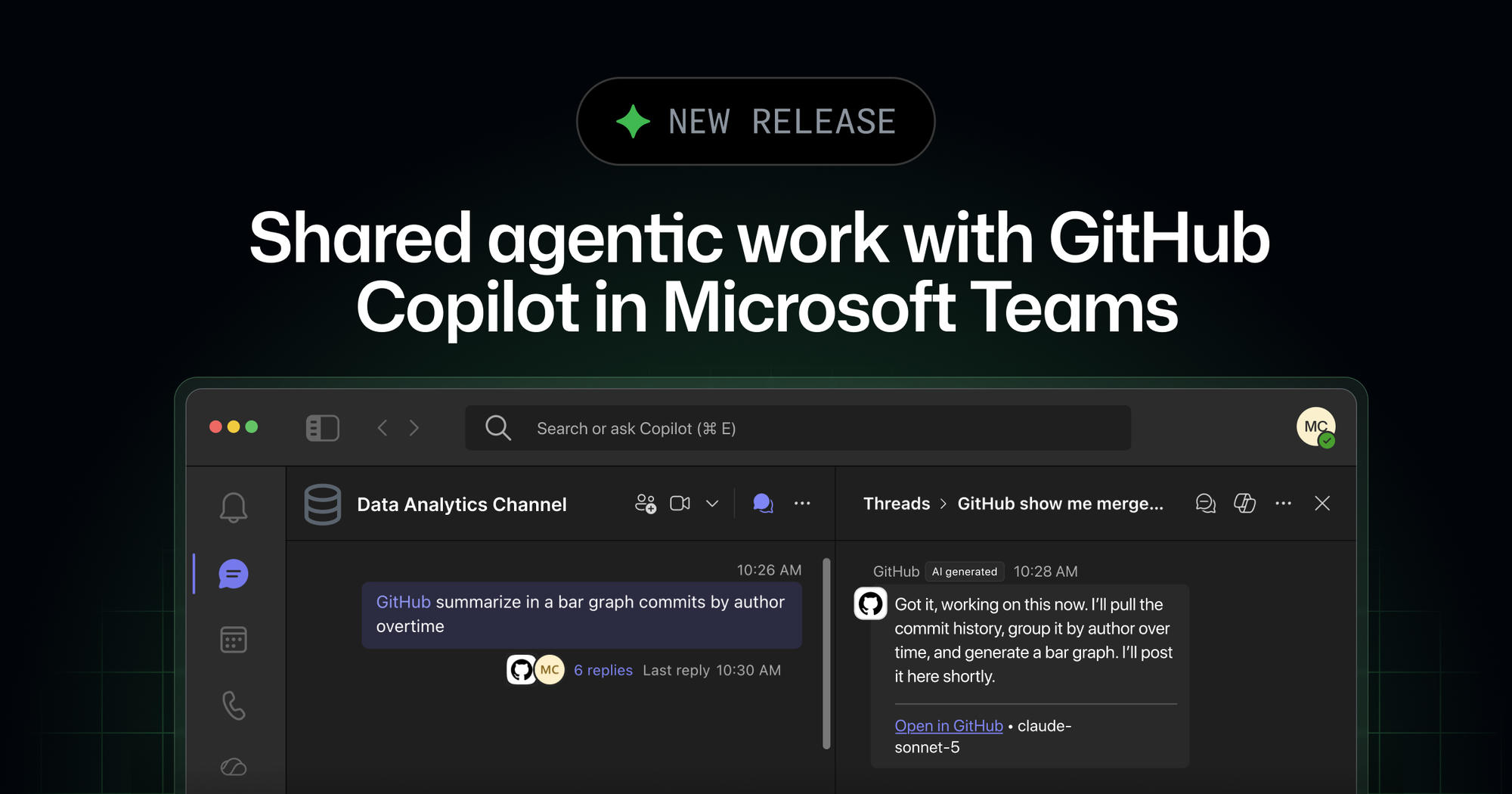
GitHub Copilot and Microsoft Teams: Shared Agentic Sessions

What happened

GitHub announced a new integration that brings shared agentic work with GitHub Copilot into Microsoft Teams.

Users can transform a Teams discussion into a collaborative agent session that everyone can see and help direct.

A session is started by mentioning @GitHub in a channel, thread, or direct message.

Why it matters

This shifts GitHub Copilot from a private assistant toward a team-oriented tool where group members can jointly guide the agent.

Making the session visible to all participants encourages shared context and collective oversight of agent actions.

Key facts

The feature is described as shared agentic work with GitHub Copilot in Microsoft Teams.

A Teams discussion can become a collaborative agent session available for everyone to see and direct.

Users initiate the session by mentioning @GitHub in a channel, thread, or direct message.

What to watch next

The announcement does not provide further details on what happens after the @GitHub mention or how the session is managed.

GitHub may release additional changelog entries explaining session permissions, limitations, or collaborative controls.

Sources

Read → Keep scrolling for the next story
Enterprise AI · 10 d ago

How AI agents can delegate better

What happened

Google Cloud is applying classic organizational leadership lessons to AI agents, arguing that multi-agent systems work best when the agents themselves can decompose and assign complex tasks effectively.

Drawing on Google DeepMind's 'Intelligent AI Delegation' study, the company highlights principles for delegation: verifying delegated work through contract-first decomposition, being cost-aware when routing tasks, and respecting sensitive data through minimal permissions.

Why it matters

As enterprises move from single AI assistants to multi-agent workflows, the quality of orchestration becomes critical. These principles position delegation not as simple task assignment but as an intelligent act involving planning, cost trade-offs, and security boundaries.

The emphasis on verification and human judgement suggests a future where agentic systems are designed with explicit checkpoints for human oversight, helping businesses decide where automation and where expert review are most valuable.

Key facts

Google Cloud says AI agents need to become good delegators to handle complex enterprise workflows.

The research framework from Google DeepMind's 'Intelligent AI Delegation' shows delegation involves intelligence, including adaptive negotiations, formal contracts, and security guardrails.

Principle 1, contract-first decomposition, calls for breaking work into tasks that can be reliably verified, with subjective assessment reserved for where human judgement is needed.

Principle 2 advises matching tasks to the right model size, using smaller, cheaper models for simple jobs and stronger models for complex ones, often via API gateway model routing or proxies like LiteLLM.

Principle 3 requires agents to grant only the minimum permissions necessary, avoiding the transfer of full sensitive data to sub-agents to protect security and context window performance.

What to watch next

Adoption of model routing and least-privilege patterns is likely to grow as organizations scale multi-agent deployments and push for cost efficiency.

Google Cloud says four principles emerged from the research, with three detailed in this announcement; the remaining principle may be explored in the original publication.

Sources

Read → Keep scrolling for the next story
Enterprise AI · 10 d ago

Google Cloud roundup: agent identity, AI database migrations, GPU savings, and more

What happened

Google Cloud has consolidated its latest updates into a single hub, covering announcements, resources, events, and learning opportunities. One highlighted item is an August 27 webinar on agent identity, led by Product Manager Shaun Liu, which addresses how stolen API keys can make malicious agents look legitimate and why static credentials and legacy IAM policies struggle to keep up with machine-speed execution.

The hub also features the All Things Agentic Hackathon, open for submissions until August 31, 2026, with a share of $190,000 in prizes; a Database Migration Service capability that uses Gemini for AI-assisted code conversion to PostgreSQL and AlloyDB; Compute Flex CUDs for G2 and G4 GPU VMs; and the GCSFS 2026.8.0 release with adaptive concurrent prefetching.

Why it matters

Agent identity is becoming a critical concern as autonomous agents scale across enterprise systems. Google Cloud's vision of unifying agent, human, and nonhuman identity through verifiable cryptographic identities could shape how organizations secure machine-to-machine interactions.

The batch of updates targets real operational pain points: the difficult final stage of database migrations, GPU data starvation during AI training, and unpredictable compute spending. Together, they give enterprises practical levers for modernizing infrastructure while controlling cost and performance.

Key facts

Google Cloud's hub is the central location for its newest updates, announcements, resources, events, and learning opportunities.

The Agent Identity webinar is scheduled for August 27 at 1 PM ET with Google Cloud Product Manager Shaun Liu.

The All Things Agentic Hackathon offers a share of $190,000 in prizes, with submissions open from August 3 to August 31, 2026.

Database Migration Service now uses Gemini to convert legacy Oracle or SQL Server code into native PostgreSQL and AlloyDB.

Compute Flex CUDs are now available for G2 and G4 GPU VMs.

GCSFS 2026.8.0 makes adaptive concurrent prefetching the default, boosting single-file throughput by up to 5x and up to 21 GiB/s when paired with Rapid Bucket.

What to watch next

The August 27 webinar may reveal how Google Cloud plans to evolve identity management for agents, humans, and nonhuman workloads.

The hackathon and GCSFS update could show how builders and enterprises adopt Google Cloud's AI and machine learning infrastructure in practice.

Sources

Read → Keep scrolling for the next story
Robotics · 10 d ago

Webinar to Show How Agentic AI Speeds Root Cause Analysis in Semiconductor Fabs

What happened

The webinar, described in an IEEE Spectrum listing, focuses on accelerating root cause analysis when yield issues arise. It notes that critical clues are typically scattered across metrology data, tool traces, chemical analysis, and facilities systems, while growing data volumes make traditional dashboards slow and fragmented.

Attendees will see a live demonstration of a multi-domain root cause investigation using Spotfire Industry Pro. The session is meant to show how Agentic AI, semiconductor-specific visualizations, and push-down compute enable faster investigation of yield excursions and process issues, even across billions of data points.

Why it matters

Siloed manufacturing data is presented as a key problem: it delays yield recovery and inflates costs. For yield, process, and integration engineers, as well as fab and operations managers, the ability to connect insights across domains without moving data could mean faster, more confident decisions during yield excursions.

The webinar targets roles supporting wafer fabs, foundries, OSATs, and IDMs, indicating that the issue of fragmented data and slow root cause analysis is a broad industry pain point. Automating cross-domain analytics may help teams maintain confidence while acting on massive datasets.

Key facts

Yield issues rarely have answers in a single system; clues are spread across metrology data, tool traces, chemical analysis, and facilities systems.

The webinar will feature a live demonstration of a multi-domain root cause investigation using Spotfire Industry Pro.

The stated takeaways include understanding why siloed manufacturing data delays yield recovery and inflates costs, and how Agentic AI automates complex cross-domain analytics and visualization generation.

What to watch next

The live demonstration is expected to show how engineers can conduct a root cause investigation spanning multiple domains without moving data, using Spotfire Industry Pro.

The session will also cover methods for scaling high-performance analytics across massive fab datasets, which could be relevant for teams dealing with billions of data points.

Registration for the free webinar is open, suggesting a practical walkthrough of the platform's capabilities for semiconductor-specific root cause analysis.

Sources

Read → Keep scrolling for the next story
Technology · 10 d ago

YouTube Creators Face Backlash Over Higgsfield AI Promotions

What happened

In recent days, several prominent filmmaking creators, including Matti Haapoja and Sam 'Kold' Kolder, posted videos demonstrating what they describe as the capabilities of the AI platform Higgsfield.

The clips showcase Higgsfield's newly added Seedance 2.5 functionality and pitch the technology as the future of video production.

The posts have drawn criticism from viewers and peers, fueling a backlash over the creators' decision to accept AI-related sponsorship money.

Why it matters

The backlash highlights a growing tension in the creator economy, where audiences may see AI platform endorsements as a conflict with traditional filmmaking values.

When top filmmaking voices promote AI tools as the future, it can shape how smaller creators and audiences perceive the role of AI in video production — and where they draw the line on sponsored content.

Key facts

Matti Haapoja and Sam 'Kold' Kolder are among the creators who posted videos about Higgsfield.

The videos highlight Higgsfield's recently added Seedance 2.5 functionality.

The creators pitch the technologies as the future of video production and have faced backlash for accepting AI money.

What to watch next

It remains to be seen whether the criticism will prompt the creators to respond, clarify their sponsorship arrangements, or reconsider future AI-related promotions.

The situation may also spark broader discussion within the filmmaking community about disclosure and editorial independence when covering AI tools.

Sources

Read → Keep scrolling for the next story
@levelsio@levelsio · AIBID #3

Okay I built it! 🍰 Infinite Slop https://t.co/2SykqwedhF An infinite and interactive AI generated live stream of slop that goes on forever and ever Anything that you write in the chat is generated next and AI will try to connect it to the previous video so there's an actual https://t.co/We7YYMXcGC

♡ 6.7K 💬 814 ↻ 536
Detalles →
Inherent's AI Teammate Faraday Claims Edge Over Anthropic and OpenAI in Research Replication
Funding · 9 d ago

Inherent's AI Teammate Faraday Claims Edge Over Anthropic and OpenAI in Research Replication

DeepMind alumni-founded Inherent says its Faraday agent outperformed rivals at replicating research.

Read →
OpenAI urges California to reinforce its AI safety bill
Funding · 9 d ago · 2

OpenAI urges California to reinforce its AI safety bill

OpenAI calls on California to update its AI safety bill, citing recent incidents and emerging risks.

Read →
AI labs lack public plans for rogue model containment, study finds
Funding · 9 d ago · 2

AI labs lack public plans for rogue model containment, study finds

New study: leading AI labs have few public plans to contain rogue models.

Read →
Polansky’s AI Startup Keeps Living Skin Alive to Hunt for Skincare Compounds
Funding · 10 d ago · 2

Polansky’s AI Startup Keeps Living Skin Alive to Hunt for Skincare Compounds

Polansky’s AI startup keeps living human skin tissue alive for weeks to find new skincare compounds.

Read →
The Unlikely City Behind China’s AI Boom
Technology · 10 d ago

The Unlikely City Behind China’s AI Boom

A Inner Mongolia city has become a key data center hub thanks to cheap energy, land, and Beijing's proximity.

Read →
Cloudflare introduces Bot Preference Sync to keep robots.txt in step with AI policies
Developer Tools · 10 d ago

Cloudflare introduces Bot Preference Sync to keep robots.txt in step with AI policies

Cloudflare's new Bot Preference Sync automatically matches robots.txt with your AI bot policies for Search, Agent, and Training.

Read →
Anthropic’s Opus 4.6 Easily Slips Past Its Own Explicit-Content Ban
Funding · 10 d ago · 1

Anthropic’s Opus 4.6 Easily Slips Past Its Own Explicit-Content Ban

TechCrunch tests found Anthropic's Opus 4.6 was easy to trick into generating explicit content.

Read →
Nvidia teams with Cloverleaf in latest data center push
Funding · 10 d ago

Nvidia teams with Cloverleaf in latest data center push

Nvidia has partnered with Cloverleaf, deepening its push into data center development as AI infrastructure spending grows.

Read →
LinkedIn’s AI Slop Button Surpasses One Million Clicks
Technology · 10 d ago

LinkedIn’s AI Slop Button Surpasses One Million Clicks

Over a million LinkedIn users have clicked the 'Seems like AI slop' button, per the company.

Read →
GitHub Overhauls Blocked-User Tools with Search, Sorting, and Pagination
Developer Tools · 10 d ago · 2

GitHub Overhauls Blocked-User Tools with Search, Sorting, and Pagination

GitHub adds search, sorting, and pagination to blocked-user management for accounts and organizations.

Read →
AWS Unveils Agentic Data Operations Platform to Accelerate Data Onboarding
Enterprise AI · 10 d ago · 2

AWS Unveils Agentic Data Operations Platform to Accelerate Data Onboarding

New ADOP reference architecture on Amazon Bedrock automates data pipelines, cutting onboarding from weeks to hours.

Read →
Amazon Bedrock AgentCore Gateway: A Maturity Model for Governing AI Agent Tools
Enterprise AI · 10 d ago · 2

Amazon Bedrock AgentCore Gateway: A Maturity Model for Governing AI Agent Tools

A four-scope maturity model helps build a governed tool gateway for AI agents with Amazon Bedrock AgentCore.

Read →
Query-aware compression cuts RAG token costs on Bedrock
Enterprise AI · 10 d ago · 3

Query-aware compression cuts RAG token costs on Bedrock

AWS describes a query-aware compression pattern to reduce RAG input tokens and costs on Amazon Bedrock.

Read →
Panasonic Avionics taps agentic AI on AWS to speed IFEC troubleshooting
Enterprise AI · 10 d ago · 6

Panasonic Avionics taps agentic AI on AWS to speed IFEC troubleshooting

Agentic AI on AWS cuts in-flight entertainment diagnosis from hours to minutes for Panasonic Avionics.

Read →
GitHub Brings Copilot Agentic Skills into Slack Public Preview
Developer Tools · 10 d ago · 2

GitHub Brings Copilot Agentic Skills into Slack Public Preview

GitHub's Slack integration now includes Copilot agentic skills in public preview.

Read →
GitHub Copilot and Microsoft Teams: Shared Agentic Sessions
Developer Tools · 10 d ago · 2

GitHub Copilot and Microsoft Teams: Shared Agentic Sessions

Turn a Teams chat into a shared GitHub Copilot agent session with @GitHub.

Read →
How AI agents can delegate better
Enterprise AI · 10 d ago · 2

How AI agents can delegate better

Google Cloud shares principles from DeepMind research on making AI agents effective delegators in enterprise workflows.

Read →
Google Cloud roundup: agent identity, AI database migrations, GPU savings, and more
Enterprise AI · 10 d ago · 3

Google Cloud roundup: agent identity, AI database migrations, GPU savings, and more

Google Cloud's update hub highlights new agent identity webinar, hackathon, AI database conversion, GPU savings, and GCSFS.

Read →
Webinar to Show How Agentic AI Speeds Root Cause Analysis in Semiconductor Fabs
Robotics · 10 d ago · 7

Webinar to Show How Agentic AI Speeds Root Cause Analysis in Semiconductor Fabs

A free webinar will demo Agentic AI for cross-domain yield root cause analysis without moving data.

Read →
YouTube Creators Face Backlash Over Higgsfield AI Promotions
Technology · 10 d ago · 1

YouTube Creators Face Backlash Over Higgsfield AI Promotions

Filmmakers face backlash after showcasing Higgsfield's Seedance 2.5 as video's future.

Read →